Can You Get Car Finance After a Previous Car Loan Default or Repossession?
Yes, it can be possible, but it’s harder. Most mainstream lenders are cautious about applicants with a previous car loan default or repossession. Some specialist lenders may still consider an application, often with a larger deposit, a higher interest rate or extra conditions. The outcome depends on the lender and your circumstances.
No lender can fairly promise approval in advance. Be wary of any offer that guarantees finance regardless of your history. A genuine lender will still assess whether the repayments are affordable for you.
What happens when a car loan defaults or a car is repossessed?
A car loan default usually starts with missed repayments. If the problem isn’t resolved, the lender may take steps to recover the car. Under Australian consumer credit rules, lenders generally need to issue a written default notice giving borrowers at least 30 days to address the default before starting enforcement proceedings. Exceptions can apply in certain circumstances.
What’s the difference between a default, a repossession and a voluntary surrender?
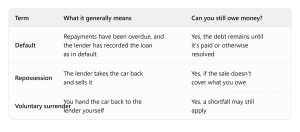
These terms are often used interchangeably, but they mean different things. Handing the car back yourself doesn’t automatically clear the debt. Check the details with your lender.
What is a shortfall debt?
A shortfall debt is the amount left over after the lender sells the repossessed car. If the sale price and any other credits don’t cover the loan balance plus enforcement costs, you may still owe the difference.
Many people don’t realise this until a letter arrives. An unpaid shortfall can affect your next application, so it’s worth finding out exactly what’s owing.
What shows up on your credit file?
A default is the entry most likely to appear on your credit report. Credit reporting rules generally allow a default to stay on file for several years, even after it’s paid.
How a repossession itself is recorded can vary between lenders and credit reporting bodies. The most reliable way to see what’s listed is to request your own credit report.
How does a previous default or repossession affect your next application?
It makes lenders look more closely at your application. A previous default or repossession signals risk, so many mainstream lenders will decline or ask for more evidence. That doesn’t mean every lender will respond the same way.
What do lenders look at?
Every lender sets its own policy, but these factors commonly come into play:
- How recent it is. A default from several years ago is usually viewed differently from a recent one.
- Whether a shortfall is still owing. An unpaid balance can weigh heavily against you.
- Your income and employment. Stable, provable income helps show you can afford repayments.
- Your conduct since. Paying bills on time after the event can count in your favour.
- The loan amount and deposit. A smaller loan or larger deposit can reduce the lender’s risk.
Recency matters, but so does how your credit score shapes a lender’s decision overall.
How long can it stay on your credit file?
Credit reporting rules generally allow a default to remain on your file for up to five years. Paying it off doesn’t automatically remove the listing, though it may show as paid.
The impact isn’t permanent, but it helps to understand how long a bad credit rating can last before you apply.
What are your options for car finance after a repossession?
You have more than one path, and the right one depends on what’s still owing and how soon you need a car. If a mainstream lender says no, second chance finance options may still be worth comparing.
Can a specialist lender help?
Possibly. Specialist or non-prime lenders assess applications that mainstream lenders often decline. They may look more closely at your recent income and conduct than at the past event alone.
The trade-offs can include higher interest rates, fees, a larger deposit or a shorter loan term. Compare the total cost, not just the weekly repayment.
A past repossession is one of several common reasons for a car loan decline, so check what else may apply before you submit another application.
Should you clear the shortfall first?
It can help. An unpaid shortfall is a visible sign of an unresolved debt. Contact the original lender to confirm the exact amount and ask whether a payment arrangement is possible.
If you’re struggling to pay, ask about hardship options. You can also contact the Australian Financial Complaints Authority (AFCA) if you believe the lender handled the process unfairly.
Will a guarantor or larger deposit help?
Sometimes. A guarantor with a strong credit history, or a bigger deposit, can reduce the lender’s risk. Neither is a guarantee of approval.
A guarantor takes on real responsibility. If you can’t make the repayments, the lender may seek payment from them. Make sure they understand this before they agree.
Is it better to wait and rebuild your credit?
It depends on how urgently you need a car. Waiting can give you time to pay down debts, build a record of on-time payments and let the default age. Even small steps towards strengthening your credit profile can make the next application look better.
The downside is that you may need transport now. In that case, weigh up other options carefully rather than accepting the first offer.
Is rent-to-own an alternative to a car loan?
Some drivers explore rent-to-own cars when a loan isn’t realistic right now. Rent-to-own is a consumer lease. It’s not a car loan, hire purchase or credit contract, so it differs from a traditional car loan in important ways.
You don’t own the vehicle during the agreed term. At the end, eligible customers may have an option to upgrade or purchase it, subject to the provider’s approval and applicable terms. Depending on the agreement, costs such as registration, insurance and servicing can be included.
What should you do before you apply again?
A little preparation can save you from another decline. Work through these steps first:
- Get your credit report. You can request a free copy from the major credit reporting bodies, such as Equifax, Experian and Illion.
- Check that the listing is accurate. Look at the dates, amounts and whether the default is shown as paid or unpaid. Ask the credit reporting body or lender to correct any errors.
- Find out what you owe. Ask the original lender for a written statement of any shortfall.
- Gather proof of income. Recent payslips, bank statements or tax records help show you can afford repayments.
- Set a realistic budget. Include registration, insurance, servicing and fuel, not just the repayment.
- Limit your applications. Each application can leave an enquiry on your credit file, so apply selectively.
- Compare total costs. Look at fees, the interest rate or lease costs, the term and what happens at the end.
What mistakes should you avoid after a repossession?

These are the most common traps:
- Applying everywhere at once. Multiple applications in a short time can look like financial stress to a lender.
- Ignoring the shortfall. An unpaid balance doesn’t go away, and it can follow you into your next application.
- Trusting “guaranteed approval” claims. No genuine provider can promise approval before assessing your situation.
- Skipping the fine print. Whether it’s a loan, a lease or a subscription, check the term, fees, insurance and what happens if you can’t keep up.
- Assuming the default has disappeared. Check your credit report so you know exactly what a lender will see.
What else do people ask about car finance after a repossession?
Do I still owe money after a car is repossessed?
Possibly. If the car sells for less than your loan balance plus enforcement costs, you may owe the difference, known as a shortfall debt. Ask your lender for a written statement of exactly what’s owing.
Is voluntary surrender better than repossession?
Not necessarily. Handing the car back yourself may avoid some enforcement steps, but a shortfall can still apply, and the default may still be recorded. Speak to your lender, and consider free financial counselling, before deciding.
Will a repossession stop me getting finance for good?
No. A repossession can make finance harder for a time, but it isn’t permanent. Over time, paying bills on time, clearing any shortfall and showing stable income can improve how a future lender sees you.
Can I get car finance if I still owe a shortfall?
It’s harder. An unpaid shortfall is a visible, unresolved debt, and many lenders will want it addressed first. Contact the original lender to confirm the amount and ask about a payment arrangement.
How long does a default stay on your credit report?
Credit reporting rules generally allow a default to stay on your file for up to five years. Paying it doesn’t automatically remove it, but the listing may show as paid. Check your own credit report for the exact dates.
Conclusion
A previous car loan default or repossession doesn’t have to end your chances of getting a car, but it does change the road ahead. Start by finding out exactly what’s on your credit file and what, if anything, you still owe. Then compare your options on total cost, not just the weekly repayment.
If a car loan isn’t realistic right now, you can pre-qualify with CarCoop online to see whether rent-to-own may suit your situation.