Which Car Leasing Company Is Best in Australia?
Choosing a car leasing provider in Australia depends on your financial situation, employment type and how you intend to use the vehicle. The right provider depends on the type of lease, vehicle selection, weekly payments, inclusions, eligibility criteria and contract flexibility.
Evaluating car leasing companies requires looking beyond flashy marketing claims or the lowest advertised weekly rate. Understanding the primary criteria for comparing providers helps you select a car lease that fits your budget and lifestyle without hidden surprises down the road.
Key Takeaway: There is no single “best” car leasing company in Australia. Salaried employees saving on tax may benefit most from a novated lease provider, while self-employed drivers, casual workers, or those with non-standard credit will find flexible consumer lease providers more suitable
How to Compare Car Leasing Companies in Australia
Evaluating several key factors helps ensure you choose a company that aligns with your financial capacity and driving needs.
1. Inclusions and Total Running Costs
Vehicle leasing may bundle some ongoing vehicle expenses into a single payment structure. However, inclusions vary between providers, so it is important to confirm which vehicle and running costs are included in the quoted payment.
When reviewing a quote, clarify whether the payment covers:
- Comprehensive vehicle insurance
- Annual state registration and CTP insurance
- Scheduled logbook maintenance and servicing
- Emergency roadside assistance
- Wear-and-tear allowances or tyre replacements
Knowing the ongoing costs of a leased car ensures you are comparing total out-of-pocket expenses rather than just a base finance rate.
2. Agreement Terms and Flexibility
Car leasing can vary between providers. Some offer arrangements such as two- or four-year terms, while other leasing products may have different structures. Examine whether the company permits early returns, contract extensions, or vehicle swaps, and ask about any financial penalties associated with altering your agreement early.
3. Eligibility Criteria and Assessment Process
Traditional car finance and commercial leasing arrangements often rely heavily on rigid credit-scoring models, requiring long-term full-time employment and an established credit history. If you are self-employed, working on a casual basis, an international resident, or recovering from past financial setbacks, traditional lenders may decline your application.
Some alternative leasing providers may assess applicants using factors such as current income, affordability and supporting documentation. Checking car lease requirements before applying helps clarify what documentation individual providers expect.
4. Vehicle Selection and Stock Availability
Some vehicle leasing companies operate as brokers, sourcing new cars directly from dealership networks, which can lead to extended delivery wait times. Other companies maintain their own inventory of late-model, quality-inspected vehicles ready for fast delivery. If you need a vehicle immediately for work or daily life, stock availability can be a deciding factor.
5. End-of-Lease Agreement
Understanding what happens at the conclusion of your contract is critical. Standard consumer finance leases differ from novated leases or hire purchases. Depending on the provider and contract type, your end-of-term options may include:
- Handing the vehicle back and concluding the arrangement.
- Upgrading to a newer model under a fresh lease.
- Option to purchase, where permitted by the agreement and provider.
Comparing the Main Types of Vehicle Leasing in Australia
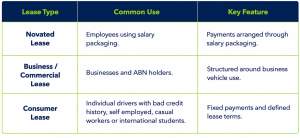
Different car lease companies specialise in specific leasing models. Identifying the correct product type narrows down the list of suitable providers.
For individuals who only need a vehicle for a few months, a car subscription may be more practical than a multi-year lease. However, for drivers seeking a reliable vehicle over two to four years, a longer-term consumer lease may provide a more predictable weekly payment structure.
Key Terms to Inspect in Any Lease Agreement
Before signing with any vehicle leasing provider, examine the agreement terms carefully to ensure complete transparency:
- Fixed vs. Variable Rates: Ensure your weekly or monthly payment is fixed for the duration of the agreement to protect against unexpected interest rate rises.
- Upfront Fees and Deposits: Clarify initial upfront costs, including documentation fees, administration charges, or initial deposit requirements across selected vehicles.
- Option to Purchase: If you want to keep the vehicle at the end of the lease term, check whether the provider offers an option to purchase.
- Maintenance and Repair Rules: Confirm which repair centres you are permitted to use for routine servicing and what process to follow in the event of a mechanical issue.
How to Choose the Right Car Lease Provider for You
Finding the right car leasing company comes down to asking the right questions about your current financial standing and long-term vehicle requirements.
- Define Your Timeline: Determine whether you need a short-term arrangement (24 months) or a longer arrangement (48 months).
- Review Your Budget: Calculate what you can comfortably afford each week, keeping in mind that bundled leases cover insurance, rego, and maintenance within that single figure.
- Check Vehicle Inventory: Browse through available vehicles to see if the models, sizes, and fuel types offered meet your daily driving requirements.
- Confirm Eligibility Criteria: Ensure you meet the provider’s documentation standards before lodging a formal application.
- Understand How Leasing Works: Read through comprehensive guides explaining how car leasing works in Australia so you enter the contract with complete clarity on your rights and obligations.
Conclusion
Determining which car leasing company is best comes down to matching your personal financial circumstances with the right lease structure. Salaried employees interested in salary packaging may consider a novated lease, while other drivers may consider a consumer lease depending on their circumstances and eligibility.
By comparing total running costs, agreement terms, vehicle selection, and end-of-lease flexibility, you can confidently choose a leasing company that keeps you moving safely and affordably.