How to Choose the Right Car Subscription for Your Budget
Managing weekly transport costs can be difficult when a fixed vehicle payment is combined with unpredictable expenses such as servicing, registration and insurance. For drivers on a tight budget, temporary visa holders or those with a limited credit history, understanding the full cost of keeping a car is especially important. Flexible vehicle subscription options can help simplify budgeting by bringing several major vehicle costs into one recurring payment.
Choosing the right car subscription for your budget means looking beyond the advertised weekly rate. Consider your current cash flow, driving habits, upfront costs, included expenses and the overall predictability of your vehicle costs before deciding which option suits you.
Quick Summary: A budget-friendly car subscription bundles registration, CTP, comprehensive insurance, logbook servicing, and 24/7 roadside assistance into one fixed weekly payment. To avoid budget strain, choose an all-inclusive plan that fits your lower-earning weekly income average rather than peak earnings.
What Is the Real Cost of Traditional Car Finance vs. a Subscription?
When evaluating traditional car loans, the advertised monthly repayment rarely reflects the total amount leaving your bank account. A finance agreement quoted at $150 per week frequently balloons toward $230 or more once you add mandatory registration, CTP insurance, comprehensive cover, routine logbook servicing, and emergency repairs.
A car subscription restructures these scattered costs into a single, predictable figure. Understanding how vehicle subscriptions work shows why this model appeals to budget-conscious drivers: instead of managing four or five separate vehicle bills throughout the year, you pay one consolidated fee that stays the same every week.
| Expense Category | Traditional Ownership / Loan | All-Inclusive Car Subscription |
| Weekly Vehicle Use | Separate loan repayment | Included in weekly rate |
| Registration & CTP | Annual lump sum (800–1,200+) | Included |
| Comprehensive Insurance | Monthly or annual premium | Included |
| Routine Servicing | Out-of-pocket per service | Included |
| 24/7 Roadside Assistance | Separate membership fee | Included |
| Upfront Capital | Multi-thousand-dollar deposit | Modest setup deposit |
How Do You Calculate Your Actual Weekly Transport Budget?
To choose a subscription plan that remains sustainable, start by analyzing analysing your verifiable weekly income rather than relying on past credit score metrics. Most subscription providers look for a stable income base—typically starting around $800 per week—to ensure repayments do not place unnecessary pressure on household finances.
According to government guidelines on buying and running a car, failing to account for recurring administrative and mechanical overheads is one of the most common budget traps for Australian drivers. Accounting for all operational variables upfront prevents cash flow strain down the road.
1. Identify Your Fixed Income Baseline
Calculate your net weekly income after tax. If your earnings fluctuate due to casual shifts, contract work, or gig economy driving, base your budget on your average income over the lower-earning weeks of the past three months rather than peak earnings.
2. Factor In Out-of-Pocket Running Expenses
While a subscription bundled agreement covers major administrative and maintenance costs, you remain responsible for daily operational expenses. Always reserve room in your weekly budget for:
- Fuel or EV Charging: Estimate your weekly distance and local fuel prices.
- Tolls & Parking: Account for daily commute routes across major metro hubs like Sydney, Melbourne, Adelaide or Brisbane.
- Excess Kilometre Charges: Ensure your plan’s weekly allowance matches your driving routine.
3. Account for Upfront Setup Costs
Unlike traditional vehicle finance, which often demands thousands of dollars as a down payment, subscriptions generally require a manageable setup fee or security deposit (often starting around $689+). Ensure this upfront figure is set aside separately from your ongoing weekly buffer.
Which Inclusions Should You Check Before Choosing a Plan?
Not every car subscription structure is identical, and budget surprises usually stem from failing to confirm what sits inside the core fee. Reviewing what’s included in a car subscription before signing an agreement ensures that your weekly payment genuinely covers your essential running costs.
A complete budget-friendly subscription should explicitly incorporate:
- State vehicle registration and Compulsory Third Party (CTP) insurance
- Comprehensive vehicle insurance cover
- Scheduled manufacturer logbook servicing and wear-and-tear upkeep
- 24/7 nationwide roadside assistance
By verifying these items upfront, you remove the risk of unexpected breakdown bills or sudden registration renewal notices disrupting your weekly spending plan.
How Do Commitment Terms Impact Overall Affordability?
Choosing the right subscription tier involves balancing flexibility against weekly cost. Shorter commitments offer high agility, but slightly longer minimum terms often unlock lower baseline rates.
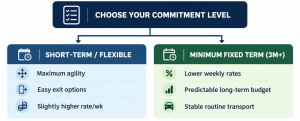
For drivers who require reliable daily transport over several months, opting for a structured minimum term (such as 100 days or 3 months) keeps the weekly rate significantly lower than week-to-week arrangements. Conversely, if you only need a vehicle while visiting Australia on a temporary visa or during a short-term work contract, the extra flexibility of a short agreement may justify a slightly higher weekly rate.
What Budgeting Mistakes Should You Avoid With a Car Subscription?
To protect your budget throughout your agreement, keep these operational details in mind:
- Underestimating Weekly Kilometres: Exceeding your agreed kilometre allowance can result in per-kilometre excess charges at the end of your term. Calculate your weekly commute accurately before selecting a tier.
- Confusing Subscriptions with Purchase Contracts: Subscriptions are designed for vehicle access and ongoing financial flexibility, not automatic ownership at the end of the term.
- Ignoring Return and Maintenance Conditions: Ensure you understand the basic care requirements expected during the subscription period to avoid reconditioning fees upon returning the vehicle.
Selecting a subscription tier with a slightly higher kilometre allowance is almost always cheaper than paying excess kilometre fees after a long road trip or busy month.
Finding Stability Through Clear Vehicle Costs
Choosing the right budget car subscription requires looking at your complete financial picture rather than focusing solely on the base price tag. By matching your weekly income against an all-inclusive rate, verifying bundled expenses like registration and servicing, and selecting a kilometre tier that fits your actual driving routine, you create a transparent, stress-free transport solution. For drivers focused on cash flow predictability and avoiding long-term bank debt, a well-chosen subscription turns vehicle ownership expenses into a single manageable routine.